What a pre-construction campaign actually needs from its renderings
A developer’s guide to pre-construction renderings: which images sell, which are wasted, how many you need, and how one scene serves every phase.
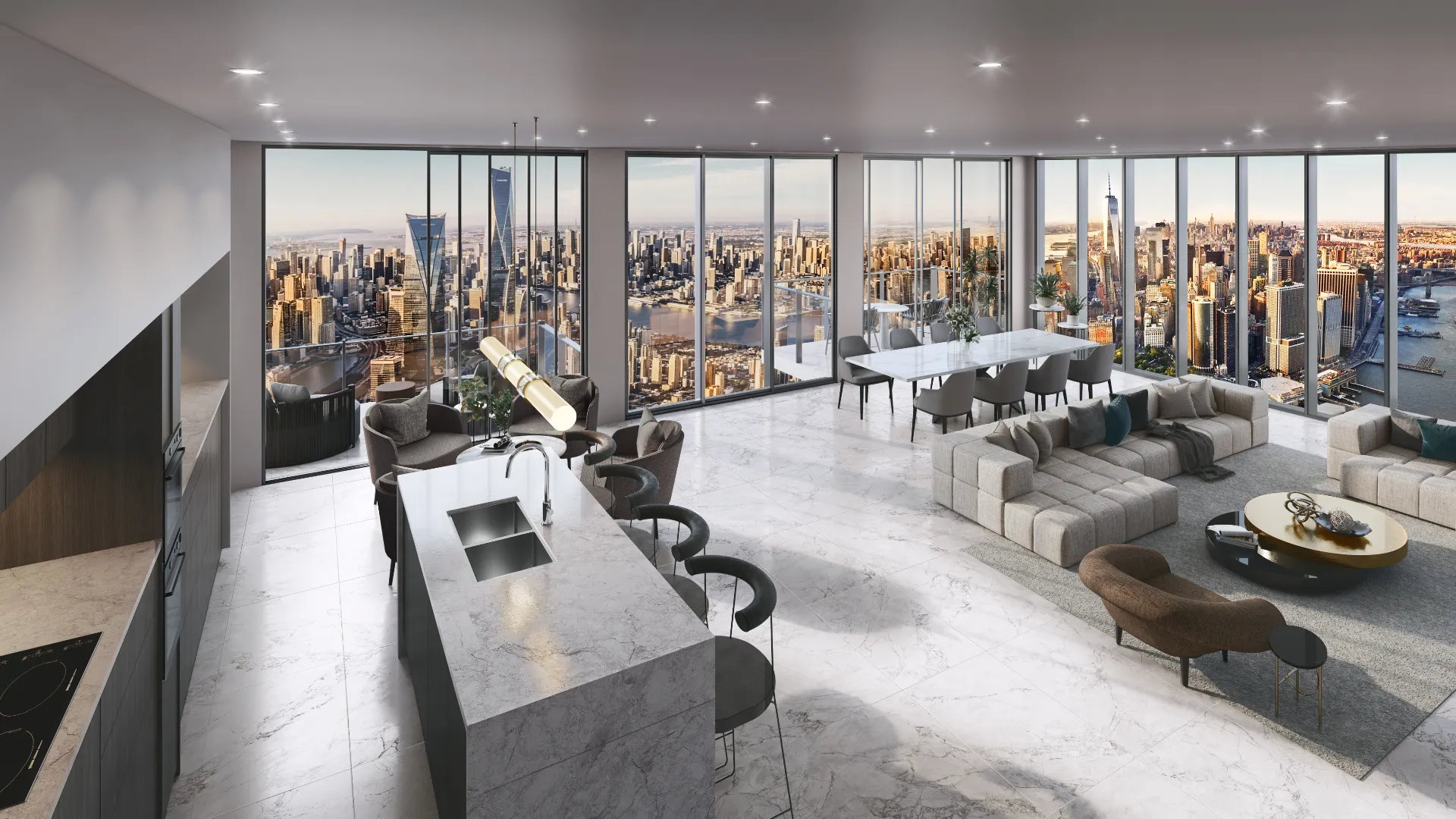
When you sell pre-construction, the imagery is not supporting the product. For the months or years before anyone can walk through the building, it is the product. Buyers commit real money to what the images show them, and they remember what they were shown when they finally walk in.
That makes campaign imagery one of the few marketing costs that is also a promise. Here is what a campaign actually needs, what is usually wasted, and how to brief it so the money goes where it sells.
The core set
Most residential campaigns are well served by a surprisingly compact set:
- A hero exterior — the building at its best hour, in its real context. Usually a dusk version too: it is the one that ends up on the billboard.
- The arrival — the entry and street frontage at eye height. It answers the first question buyers ask: what is it like to come home here?
- Two or three interiors per apartment type — the living and kitchen space, a bedroom, a bathroom — in the finishes actually being sold.
- The outlook — the real view from representative levels and orientations. In many projects it sells more than any other image, and it is the one most often faked.
- Amenity — the pool, the rooftop, the lobby, where they are part of the offer.
- An aerial — where the building sits, what is nearby, how it connects.
Beyond stills, a ninety-second film carries the story for launch events and social media, and an interactive tour lets buyers in the sales center — and those buying from further away — walk through an apartment and switch finishes themselves.
What is usually wasted
Near-identical views. Four slightly different angles on the same facade add cost without adding information. One strong hero and one strong arrival do more.
Generic lifestyle styling. The same bowl of lemons and the same throw on the same sofa signal a generic product. Style the rooms for the buyer this building is actually for.
Views that are not real. An outlook borrowed from a better position, or a harbor glimpse the building will not have, is the fastest route to unhappy buyers at closing. Every view should be built from the real context at the real floor level.
Build it once
The biggest saving in development imagery is also the least used: build the scene once and use it for everything.
A model built accurately for the planning submission can be relit, restyled and regraded for the launch. The same scene then produces the frames for each phased release, the billboard artwork, the brochure spreads and the social crops. Commissioned together, a full set costs a fraction of the same images bought one at a time — because the expensive part is the scene, not the frame.
Tell your studio at the start that planning and marketing are both coming, and it will model accordingly.
Sequencing with the campaign
An order that avoids rework:
- Planning set — accurate context views and aerials for the application.
- Launch set — hero exterior, arrival, core interiors, outlook views and amenity.
- Film and tour — storyboarded once the launch set is approved, so they share its look.
- Release frames — a new frame from the same scene as each release goes to market.
Allow eight to twelve weeks for a full campaign with film. Stills alone can move much faster, but storyboarding and animatic approval are not stages worth compressing.
Formats matter more than people expect
The same image may need to work on a billboard, a printed brochure, a website and a phone screen. Tell the studio every destination in the brief. A frame composed for a phone crops badly on a billboard, and resolution that looks fine on screen falls apart in print.
The honesty obligation
Most campaigns carry a disclaimer that the images are an artist’s rendering. A disclaimer is not a defense against imagery that buyers feel misled by. The standard to render to is simple: nothing in the image that is not in the plans, finishes as actually specified, and views as they will really be.
It is also, conveniently, what sells. Buyers are sophisticated, and imagery that looks too good to be true tends to be read that way.
See our pricing for campaign sets, or read how we work. If you have a development in planning, send us the drawings — we will tell you what the campaign needs, and what it does not.