How to choose a 3D rendering company: nine questions to ask first
Every studio’s portfolio looks good. What decides a project is the process — nine questions that expose it, and the answers to be wary of.
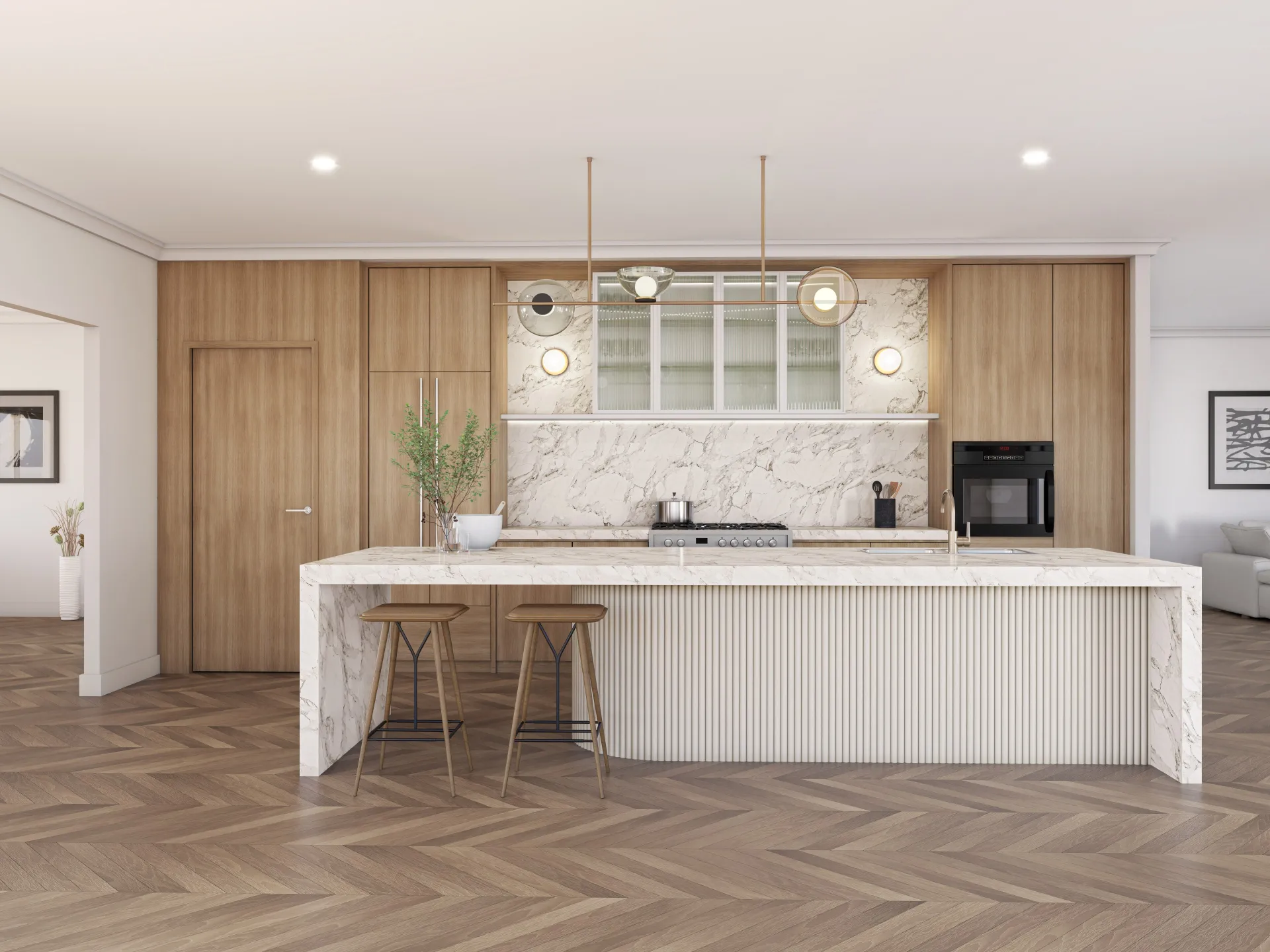
Every studio’s portfolio looks good. It is the one thing a studio controls completely: the best dozen images from hundreds of projects, often from years ago, sometimes made by artists who have since left.
What a portfolio cannot show you is how the work gets made — and that is where projects go wrong. Late delivery, revision rounds that multiply, an image that does not match the drawings, a planning image that gets picked apart. Those failures come from process, not talent.
So ask about the process. These nine questions will tell you more than any portfolio.
1. Will you give me a fixed price, a scope and a date before anything starts?
A capable studio can price a project from drawings and a sentence about what the image is for. If the answer is an hourly rate, a range, or “let’s get on a call first”, you are at the start of a sales process, not a project.
Be wary of prices that do not say what they include: resolution, number of views, revision rounds and turnaround.
2. Who will actually work on my project?
Some studios sell with senior work and deliver with junior artists, or pass the job to a production team elsewhere without saying so. Neither is automatically bad, but you should know. Ask who builds the model, who lights it and who grades it — and whether one person carries it from start to finish.
3. When do I approve the camera and the lighting?
This is the question that predicts revision cycles. Composition and lighting should be agreed on a simple gray-box model, before anyone spends hours on materials. A studio that shows you a finished image first and then asks what you think is setting both of you up for expensive rounds.
4. Are the materials real?
“Dark brick” rendered from a library texture is not your brick. Ask whether the studio can match the named products in your finishes schedule — from a scanned library, from manufacturer data or from a physical sample — or whether it will approximate.
5. Is the surrounding context real?
For planning work especially, ask how the neighboring buildings are modeled. The right answer is from survey, parcel data and site photography. An invented context is quicker to make, and it is the first thing an opponent checks.
6. How do revisions work, and what is included?
“Unlimited revisions” usually means the process is not controlled, and you pay for that in time. Look for a defined number of rounds, set out in the quote, at defined stages — and a process designed to make most of them unnecessary.
7. Can one scene serve more than one use?
If your project needs planning imagery now and marketing imagery later, the model built for one should serve the other. Ask whether the studio will build for both from the start. It is the single biggest saving available, and most buyers never ask.
8. What do you need from me?
A studio that asks for a site plan with a north point, a finishes schedule and where the image will be used is thinking about your result. One that only asks for “the drawings” is going to guess — and guesses are what revision rounds are made of.
9. Will you tell me when I do not need you?
This one is revealing. Not every image needs the premium tier: a straightforward compliance image usually does not. A studio that will say so, and point you somewhere cheaper, is one whose advice you can trust when it says an image does need the extra care.
Comparing quotes fairly
When the quotes arrive, line them up on the same terms:
- Resolution — 4K and print resolution are not the same thing as “HD”.
- Views — how many camera angles are explored before one is chosen.
- Revisions — how many rounds, and at which stages.
- Turnaround — a date, not “about two weeks”.
- Files — web and print exports, layered files, formats.
- Scope — styling, landscape and surrounding context: included, or extra?
The cheapest quote is often the one that has quietly left something out.
The short version
Judge the portfolio by the work you would actually commission — your building type, at your level. Then judge the studio on its process: a fixed price, a named artist, camera approval before materials, real materials and context, and the honesty to say when you do not need it.
We publish our pricing and our process because these are the questions we would want answered ourselves. If you have a project in mind, send us the drawings and a sentence about what the images are for.