AI rendering vs 3D rendering: what AI image tools can and can't do for a real project
What AI image tools do well, where they fall short on a real building, who owns an AI image under US copyright law, and how listing rules treat AI edits.
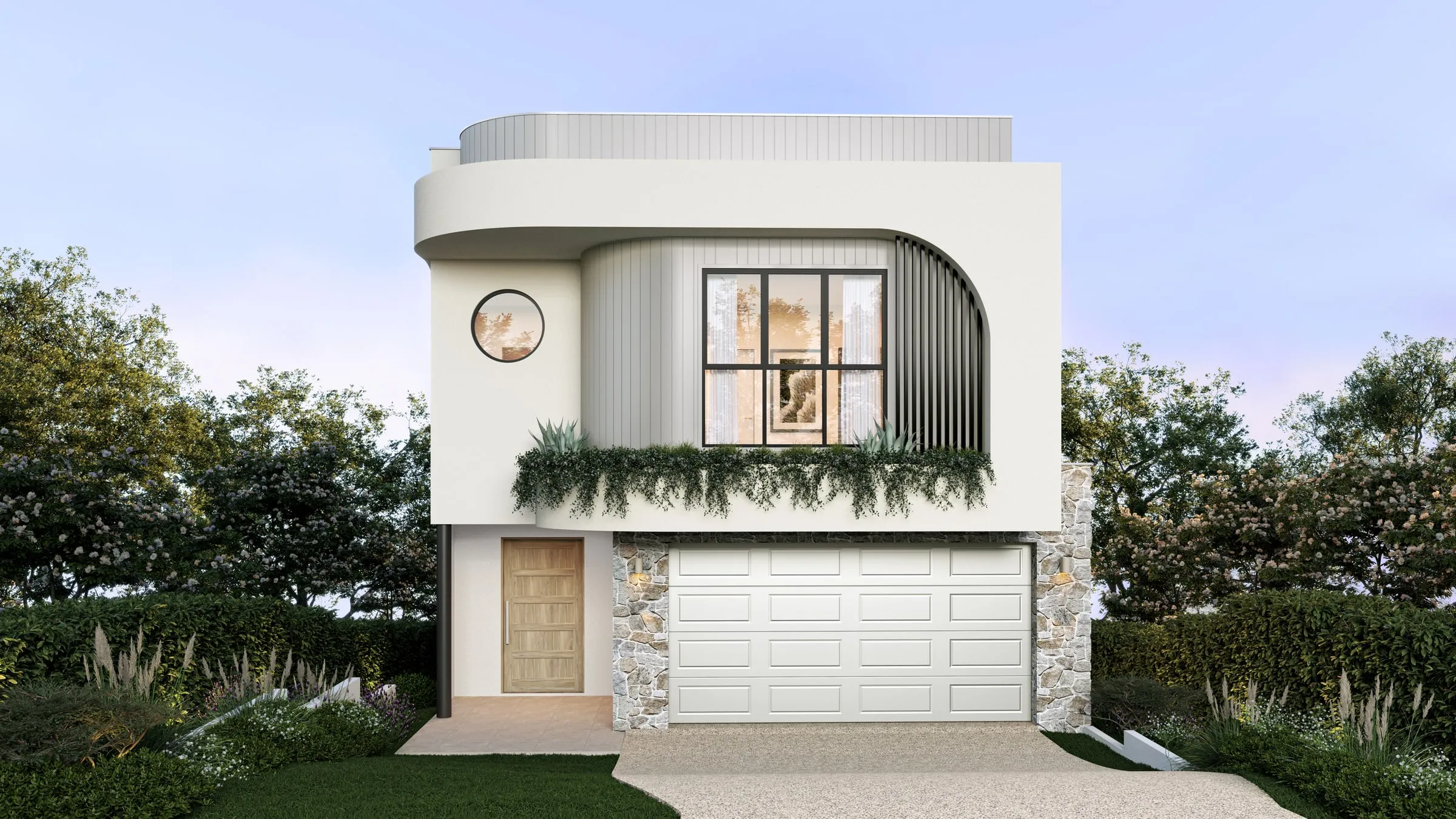
AI image tools can turn a sentence, a sketch or a photo into a convincing picture of a house, quickly and cheaply, and for some jobs that is exactly what you need. For others, such as an image a buyer will rely on or a board will check against the drawings, the picture has to be of one particular building. This guide sets out what each approach does well, where AI falls short on a real project, who owns an AI-generated image under US law, and how to tell which one a job needs.
Generating a picture versus modeling your building
A 3D rendering starts with a model. The building is modeled in three dimensions from the plans, elevations and sections, at real dimensions, with the specified materials applied and the sun placed for the site’s real orientation. The computer then calculates how that light falls on that geometry and reaches the camera; what is 3D rendering walks through the whole process. Every part of the image traces back to something on the drawings, and 3D modeling and 3D rendering explains how the two steps divide the work, and why every view drawn from one model shows the same building.
Most of what is called AI rendering works the other way around. An AI image generator takes a prompt, often with a reference image, and produces a new picture that fits it. The US Copyright Office, describing how these systems work in its January 2025 report on copyrightability, notes that the output of current generative AI systems “may include content that was not specified and exclude content that was”, and that many popular systems give different results from one request to the next, even with an identical prompt. Some let users set a “seed” number to repeat a result, though even these cannot always guarantee perfect consistency (US Copyright Office, Copyright and Artificial Intelligence, Part 2).
That isn’t a flaw: a generator is built to produce a plausible picture, not to measure anything. It only becomes a problem when the picture has to be of one building on one site.
Where AI tools genuinely help
Many architects are now trying these tools, and they find the most value at the start of a project. In an online survey of nearly 800 design professionals run by Chaos and Architizer in November 2025, nearly two-thirds said their firms were already experimenting with AI, and one in five firms were fully embracing AI-driven workflows (Chaos; Architizer). Architizer’s write-up says architects find the greatest immediate value in early-stage design, naming concept generation, image enhancement and rapid creative iteration. Nearly 86% of current AI users reported measurable time savings in design and visualization tasks, and 74% of respondents said they were likely or very likely to increase their use of AI tools over the next 12 months.
That matches what the tools are good at:
- Concept and massing variations. A dozen directions for a facade before anyone commits to one.
- Mood studies. A palette, a season or a time of day, to talk about how a place should feel rather than how it is detailed.
- Quick restyles. Darker siding, a drier garden, a flatter roof: a fast way to start a conversation with a client.
- References for a brief. The atmosphere you want is often easier to show than to describe; briefing a rendering studio covers what else to send.
When nothing in the image has to be exact yet, speed and variety are the point, and a full model would be overkill.
Where they fall short on a real project
The same write-up notes that architects are “increasingly seeking tools that offer greater precision and control.” On a real project, precision and control are the job. These are the places to check a generated image against the drawings:
- Dimensions and proportions. Anything the input doesn’t fix, the tool fills in. A floor plan fixes the footprint; ceiling heights come from the sections and roof pitch from the elevations (what each drawing tells a studio), so without them, heights, overhangs and the slope of the roof can come from what looks right rather than what is drawn.
- Window count and position. Count them against the elevations, on every side shown. A window that moved, grew or vanished changes the house, the neighbor’s privacy and what a board will approve.
- Specified products. A named brick, a siding profile, a particular garage door. Unless the tool is given the product, it will usually offer a lookalike from the same family.
- The real view and the real sun. Unless the context comes from photos or a survey of the site, the neighbors, the slope and the street are invented, and the sun can sit wherever the picture looks best.
- Consistency across views. The front, the rear and the kitchen have to show the same house, and elevation options have to differ only where the options differ. With the variation the Copyright Office describes, matching several generated views is work in itself; rendered from one model, every view shows the same building.
- Repeatability when the design changes. When a window moves, the model is edited and the views are rendered again from the same cameras. A generated image has no model behind it, so a change means generating again and checking everything again.

Who owns an AI-generated image
In the US, copyright protection requires human authorship. The Copyright Office’s January 2025 report concludes that, given current generally available technology, “prompts alone do not provide sufficient human control to make users of an AI system the authors of the output”, and that copyright does not extend to purely AI-generated material (US Copyright Office, Copyright and Artificial Intelligence, Part 2).
That doesn’t leave every image that touched AI unprotected. The same report says human authors are entitled to copyright in their work that is perceptible in AI-generated outputs, in the creative selection, coordination or arrangement of material in the outputs, and in creative modifications of the outputs. It also says that using AI tools “to assist rather than stand in for human creativity does not affect the availability of copyright protection for the output.” Anyone registering a work that contains more than a de minimis amount of AI-generated material must, under the Office’s registration guidance, disclose it and briefly describe the human contribution (US Copyright Office, Copyright Registration Guidance: Works Containing Material Generated by Artificial Intelligence).
For a developer or builder, the practical point is the marketing images you plan to rely on for years. If a campaign’s hero image came from a prompt alone, there may be no copyright in it to enforce when someone else reuses it. Ask whoever supplies your images how they were made, and put in writing who owns them and how you may use them. How to choose a 3D rendering company lists the rights questions worth asking any studio.
This is general information, not legal advice.
AI images in listings and sales material
Listing and advertising rules judge an image by what it leads a buyer to expect. NAR’s Code of Ethics requires REALTORS® to “present a true picture in their advertising, marketing, and other representations”, and Standard of Practice 12-10 extends that to images, including the use of misleading images (NAR, 2026 Code of Ethics and Standards of Practice).
California has gone further and names AI outright. Since January 1, 2026, licensees using digitally altered images in real estate advertising must comply with Business and Professions Code section 10140.8 (California Legislative Information, BPC 10140.8), which covers images altered with photo editing software or artificial intelligence. The Department of Real Estate’s March 2026 advisory says that means a clear disclosure when images have been digitally modified in a way that changes the appearance of the property, including modifications created or enhanced by AI, with the original, unaltered image made available to consumers. It adds that failing to review AI-generated images “may result in violations even if the alteration was unintentional” (California DRE, Artificial Intelligence in California Real Estate). CRMLS’s FAQ on the same law says AI-altered images count as digitally altered, and that AI-generated landscaping images are not permitted in its MLS (CRMLS, Digitally Altered Images FAQs).
| Applies to | What it requires | Source | |
|---|---|---|---|
| California | Licensees, since January 1, 2026 | A clear disclosure when an image is digitally altered in a way that changes the property's appearance, AI included, with the original made available | California DRE |
| CRMLS | Listings in that MLS | AI-altered images count as digitally altered; AI-generated landscaping images are not permitted | CRMLS FAQ |
| NAR members | REALTORS® nationwide | A true picture in advertising and marketing; Standard of Practice 12-10 covers images | NAR Code, 2026 |
| New York | New condominiums, HOAs and co-op offerings | Renderings marked as artist's renderings, accurately showing dimensions, height, landscaping and surroundings | 13 NYCRR 20.6(h) |
| Minnesota | Ads for subdivided land | Renderings not captioned as such make an ad presumed misleading | Minn. R. 2810.1300 |
Renderings of homes not yet built have MLS rules of their own, covered in real estate rendering and set side by side in our comparison of 10 MLSs. Whatever made the image, label it for what it is, and keep it true to the plans and the finish package on offer.
Design review, zoning and HOA boards judge accuracy
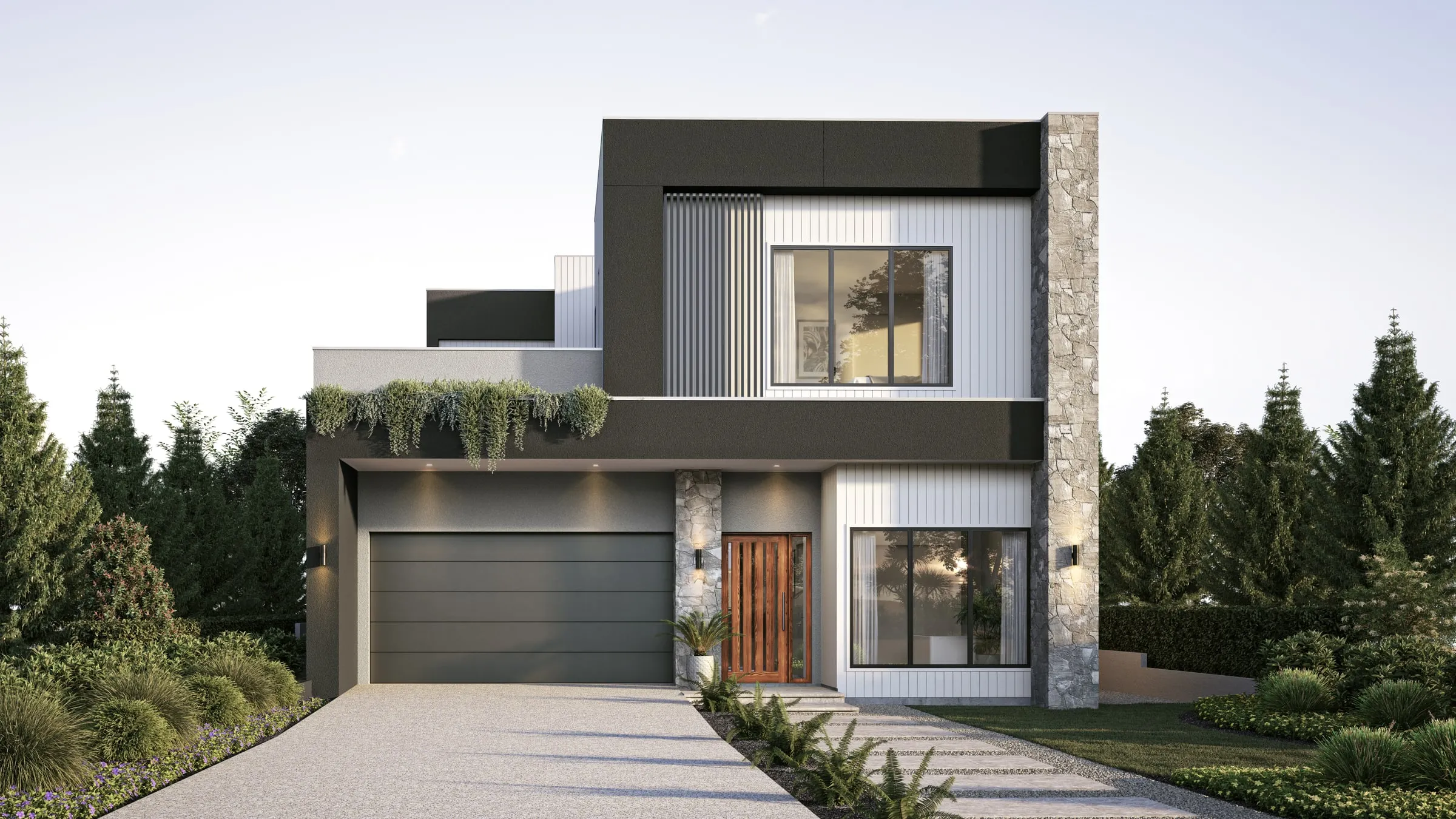
A review board is weighing one proposal against its own rules and the street it joins. San Francisco Planning, for one, strongly recommends “a 3-D representation of your project in relation to its context” (San Francisco Planning, Plan Submittal Guidelines). The words that matter are “your project” and “its context”: the image is evidence about one building on one site.
An image with an extra window, a missing neighbor or warmer materials than the schedule gives the board a reason to doubt the rest of the application. What a planning department wants from your rendering and renderings for an HOA architectural review cover what each kind of board checks. If AI played any part in an image for a board, say so, and check it against the drawings before it is filed.
A five-point test for any image, AI or studio
Before an image goes in front of a buyer, a board or a lender, hold it up against the drawings:
- Does it match the elevations? Heights, roof form, overhangs, and where each material starts and stops.
- Is the window count right? Every window and door on every side shown, in the right place and at the right size.
- Are the materials the specified ones? The products on the finish schedule, not lookalikes.
- Is the sun right for the site? Shadows falling the way the site’s real orientation puts them, at a believable time of day. Why renderings look fake covers what wrong light does to an image.
- Would it survive a design change? If a window moves next week, can the same view be updated from the same camera, or does it have to be made again from scratch?
A studio rendering should pass all five as a matter of course; that is the point of modeling from the drawings. An AI image can be checked against the first four, but the fifth depends on having a model to change.
When to use which
| Stage or use | Better suited | Why |
|---|---|---|
| Early concept and massing options | AI image tools | Speed and variety; nothing has to be exact yet |
| Mood, palette and style references for a brief | AI image tools | A picture explains a feeling faster than words |
| Client sign-off on a design | Model-based rendering | The client is approving the building as drawn |
| Design review, zoning and HOA submissions | Model-based rendering | Boards check the image against the drawings and the street |
| Marketing and pre-construction sales | Model-based rendering | Buyers compare the finished home with the picture |
| MLS listings for homes not yet built | Model-based rendering, labeled | Listing rules police altered and misleading images |
On most projects the two aren’t rivals. AI suits the stage before there are drawings; a model suits everything after. Once there is a set of plans and elevations, the image should come from them.
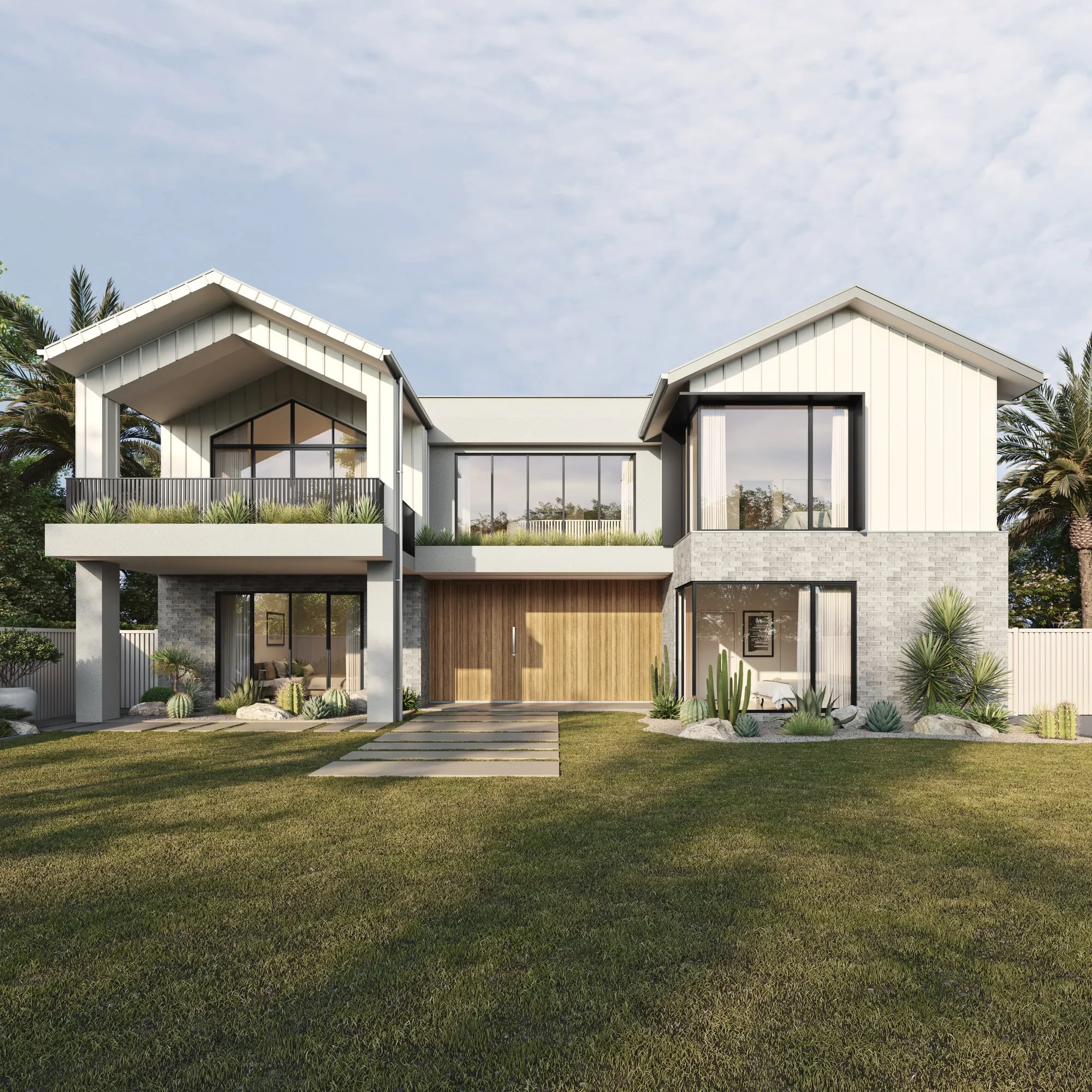
Design settled enough to show? Send us the drawings and a fixed price and a delivery date come back by the next business morning. Or see how we work, our exterior rendering and our published prices first.