CGI vs 3D rendering — what the words mean, and when the difference matters
CGI, 3D rendering, renderings and visualization get used interchangeably in real estate. What each one means, how they differ, and what to ask for in a brief.
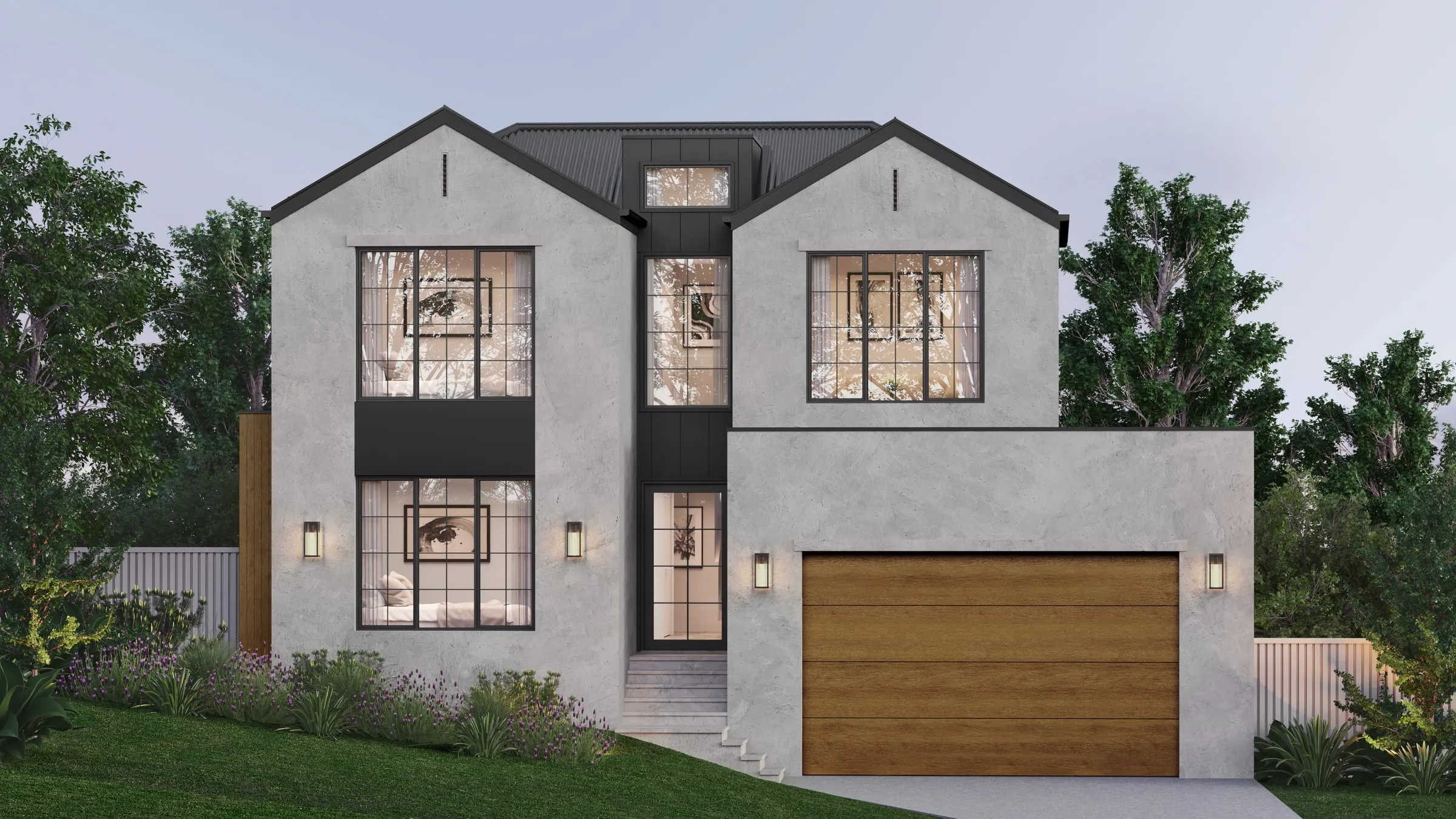
If one studio has quoted you for “CGIs” and another for “3D renders”, you have probably been quoted for the same thing. The words overlap so heavily that most people use them interchangeably — but they are not quite synonyms, and in a brief the difference occasionally matters.
CGI is the family
CGI stands for computer-generated imagery: any still or moving image created with computer graphics. Film visual effects are CGI. So are video-game worlds, product shots of cars and phones that were never photographed, animated films, and — the case that concerns property — images of buildings that have not been built.
CGI can be two-dimensional, like an illustration painted digitally, or three-dimensional, built from a 3D model. When people say “3D CGI” they mean the second kind: imagery generated from a model with real geometry, which can be viewed from any angle and lit like a real object.

3D rendering is the step that makes the image
3D rendering is the process of producing an image from a 3D scene — the computer calculating how light falls on the model, bounces between its surfaces and reaches the camera. It is one step in making 3D CGI, and the one that gives the result its realism. Our explainer, what is 3D rendering, walks through the whole process.
So all photoreal architectural CGI is rendered, but not all CGI is architectural, and not all of it is meant to look real. A cartoon-style animated film is CGI too.
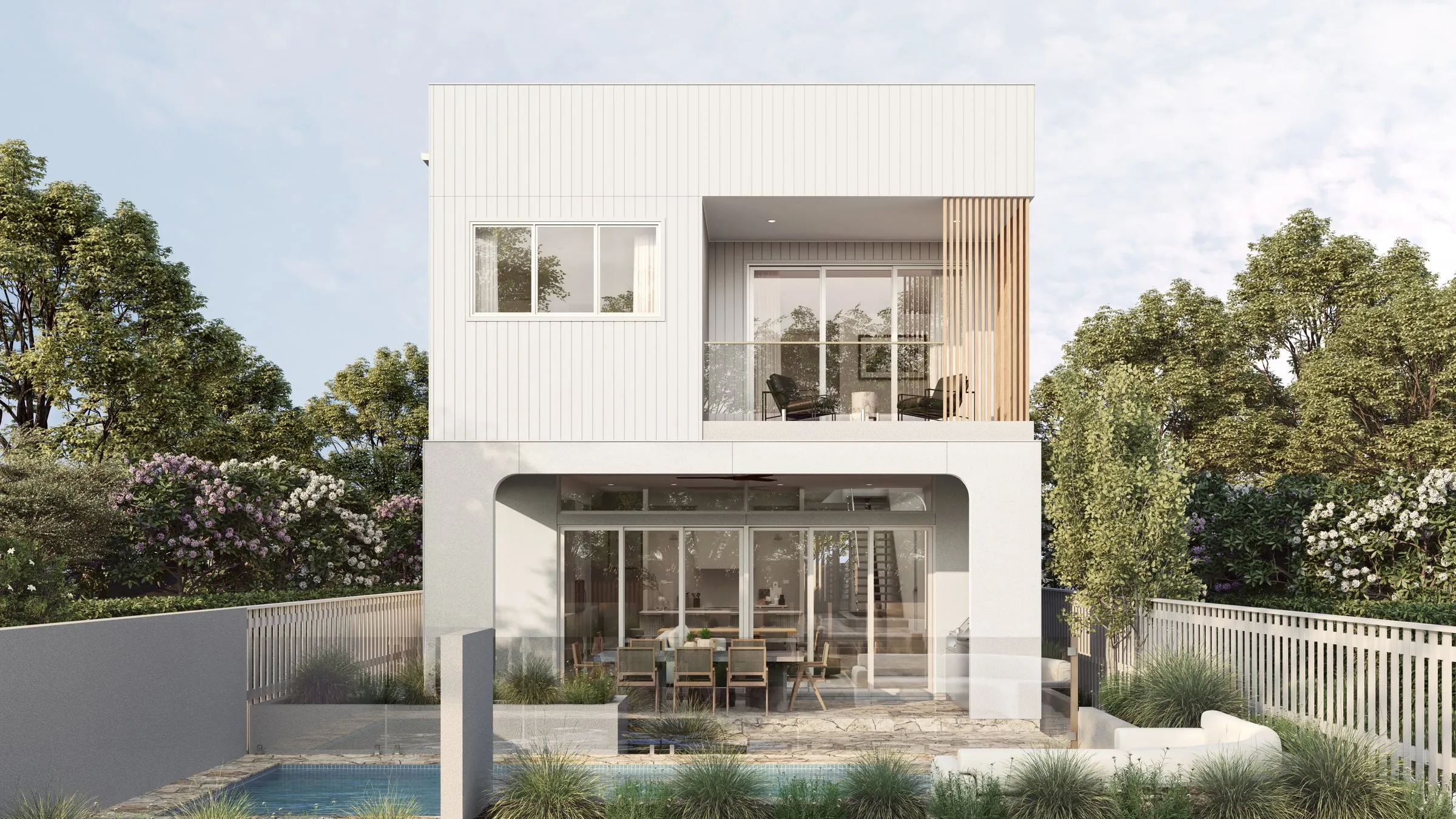
Why property uses so many words for one thing
Mostly geography.
- “CGIs” is the British habit. UK developers and agents label their marketing imagery CGI, and the small print usually says “computer-generated image, for illustrative purposes”.
- “Renders” is what Australians say, and what most Australian studios call their work.
- “Renderings” is the American word for the finished image.
- “Architectural visualization” is what the industry calls itself, and “archviz” is its shorthand.
A buyer, an architect and a developer can describe the same image three different ways in one meeting. None of them is wrong.

When the label matters in the United States
In US advertising, what counts is the impression an image leaves, not what it’s called. Section 5 of the FTC Act declares unfair or deceptive acts or practices unlawful, and the Federal Trade Commission’s Policy Statement on Deception finds deception where a representation, omission or practice is likely to mislead a consumer acting reasonably in the circumstances, to the consumer’s detriment. The Commission evaluates the entire advertisement, and the statement cites a court of appeals on its right to scrutinize the visual imagery of advertisements, not only the words.
A caption doesn’t settle it either. The same statement says written disclosures or fine print may be insufficient to correct a misleading representation, that disclaimers may not cure otherwise deceptive messages, and that qualifying disclosures must be legible and understandable. New York writes the label into its rules: for newly constructed condominiums, an artist’s rendering in an advertisement must be marked as one and must depict the property and its surroundings accurately and realistically (what an artist’s rendering must show).
So whatever the image is called (CGI, rendering or artist’s rendering), the useful test is close to the Commission’s own: would a buyer acting reasonably be misled by the picture? An image modeled from the current drawings, in its real context and with the specified finishes, is made to pass it, and the caption then simply says what kind of picture it is.
Sources, checked October 2026: Federal Trade Commission, Policy Statement on Deception (1983); N.Y. Comp. Codes R. & Regs. tit. 13, § 20.6, Advertisements (Part 20, Newly Constructed, Vacant or Non-Residential Condominiums).
CGI versus photography
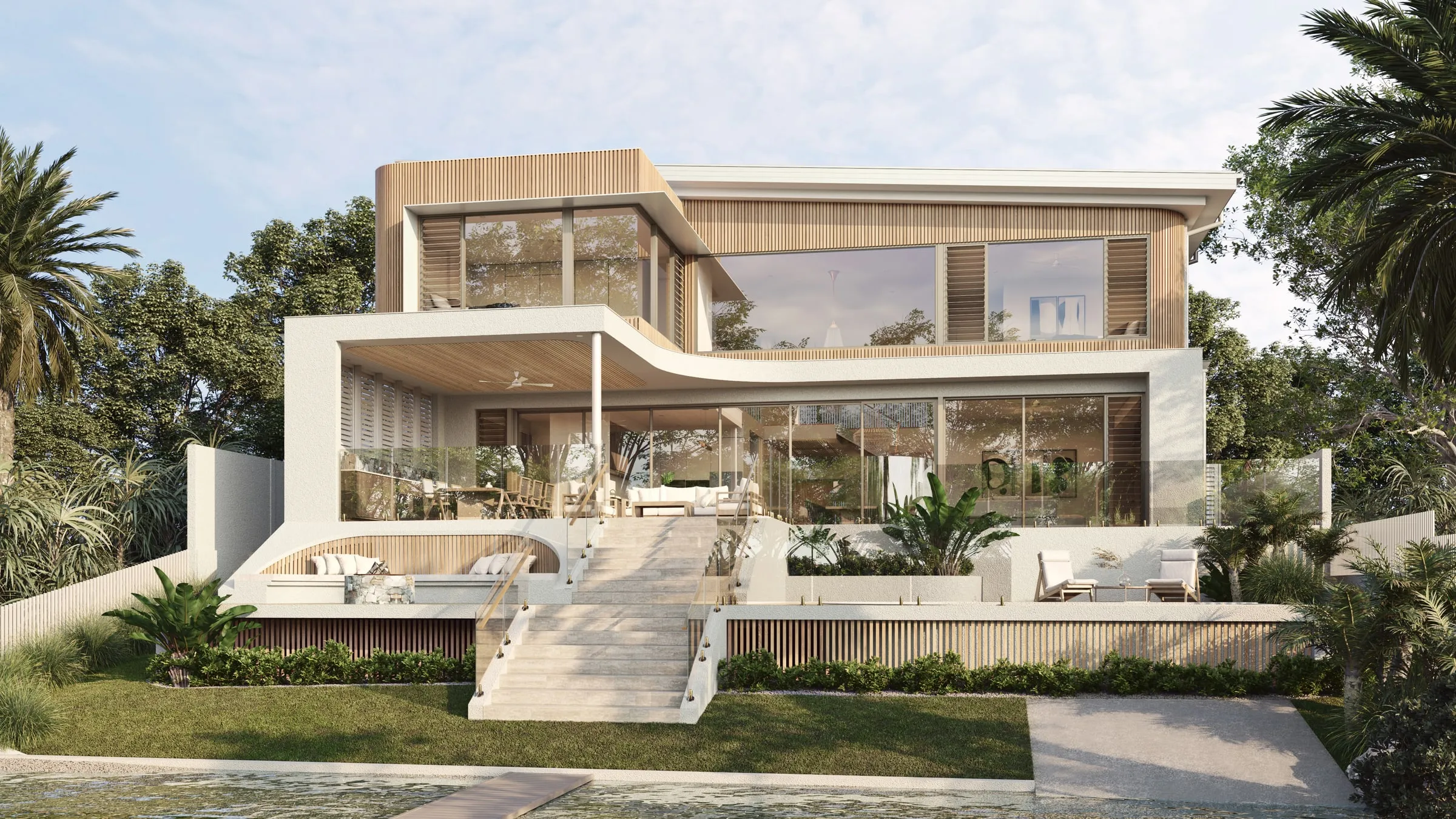
This is the one comparison that is genuinely about different things. A photograph records a building that exists; a CGI shows one that does not yet, or shows an existing building as it will be once the work is done. Once a building is finished, photography is usually the honest choice for marketing — although there are still good reasons to render a completed project, which we set out in renders versus photography.
CGI versus AI-generated images
Image generators can now produce a convincing picture of a building in seconds. What they cannot produce is your building: the right dimensions, the specified materials, the real view from the site, the windows where the drawings put them. For a design review, a planning submission or a sales campaign, that accuracy is the entire point — an image used to sell a home has to show the home being sold. 3D CGI built from the drawings does; a generated picture only resembles one. AI image tools do have a place early in a project, for concept options and mood studies; where they help and where they fall short comes down to whether the picture has to be of one particular building.
What to ask for in a brief
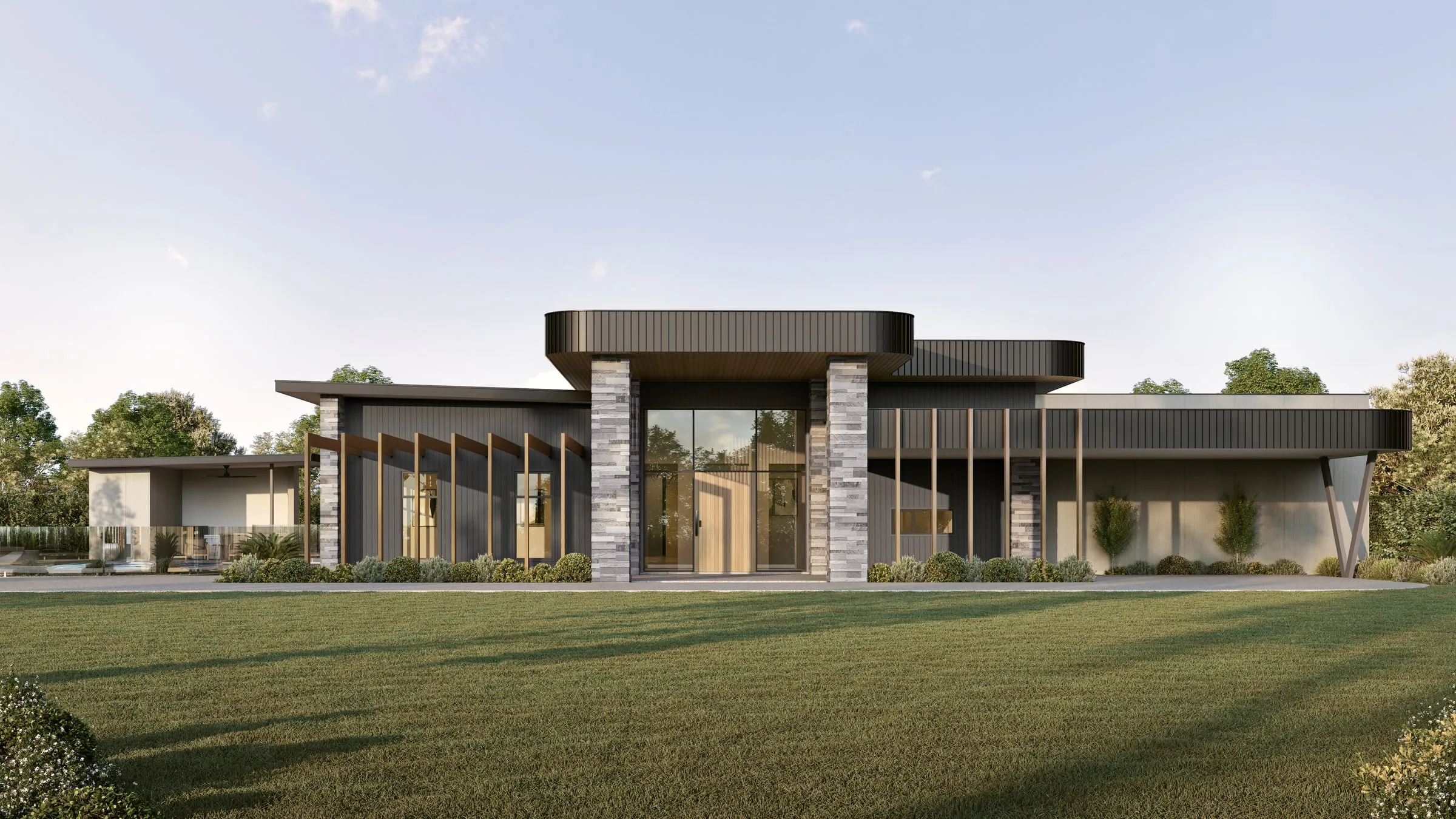
Whatever word you use, these are the things that change the price and the result:
- Built from the drawings. Ask for imagery modeled from your current plans, elevations and sections, at real dimensions.
- What the image is for. Planning, marketing and design review need different views and different levels of finish.
- Views and resolution. How many images, from where, and at what size — 4K for screens, 8K or print resolution for billboards and brochures.
- Revisions. How many rounds are included, and what counts as a change.
Our guide to briefing a rendering studio covers the rest, and how to choose a studio covers the questions worth asking before you do.
Call it CGI, a render or a rendering — see our work and our 3D rendering services, or send your drawings for a fixed quote.